BGA Rework Station Quick Selection Guide
To help you choose the right equipment, here is a professional comparison of our top-selling BGA rework stations.
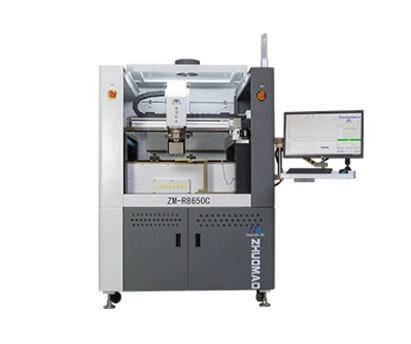
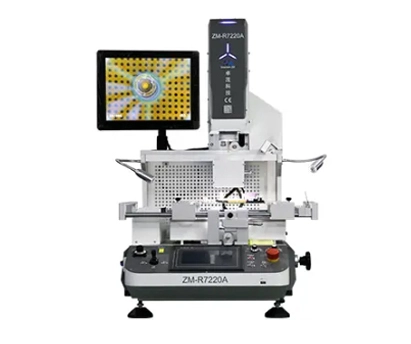
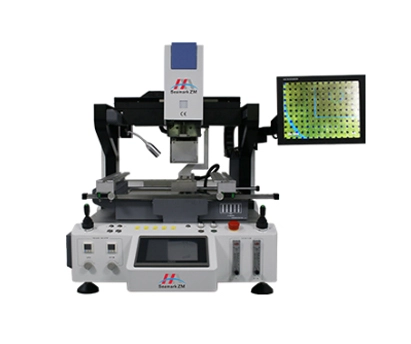
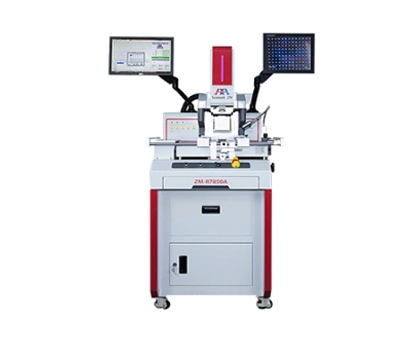
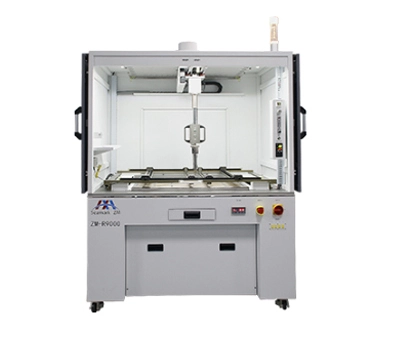
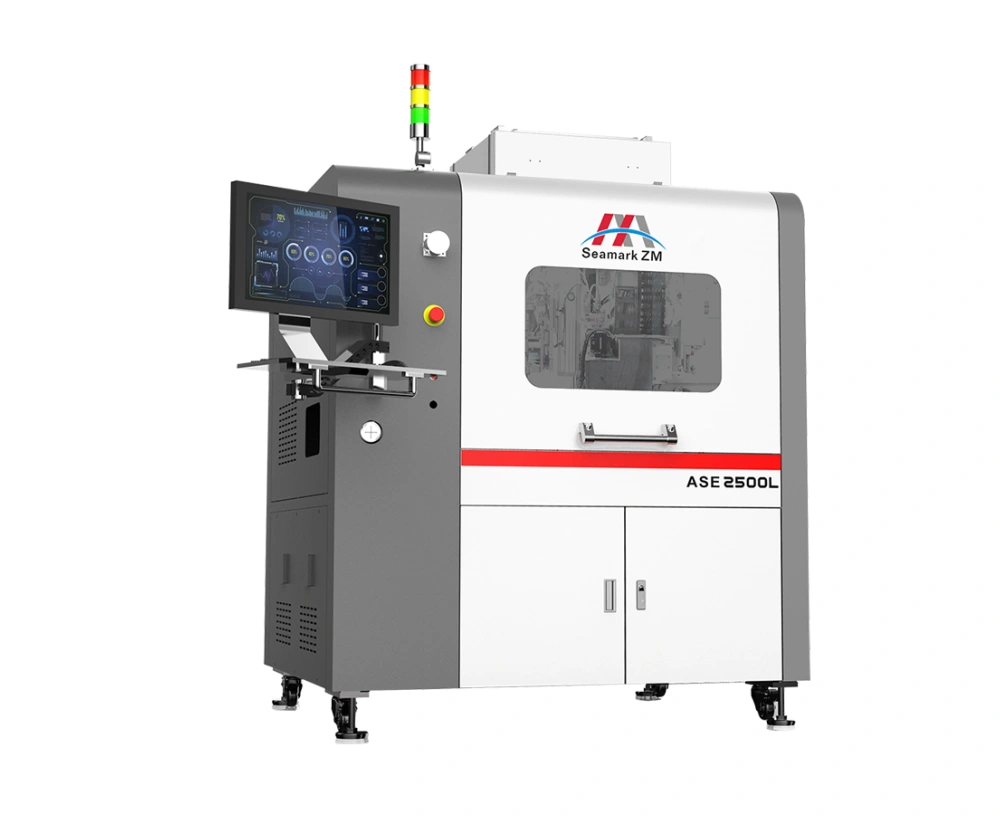
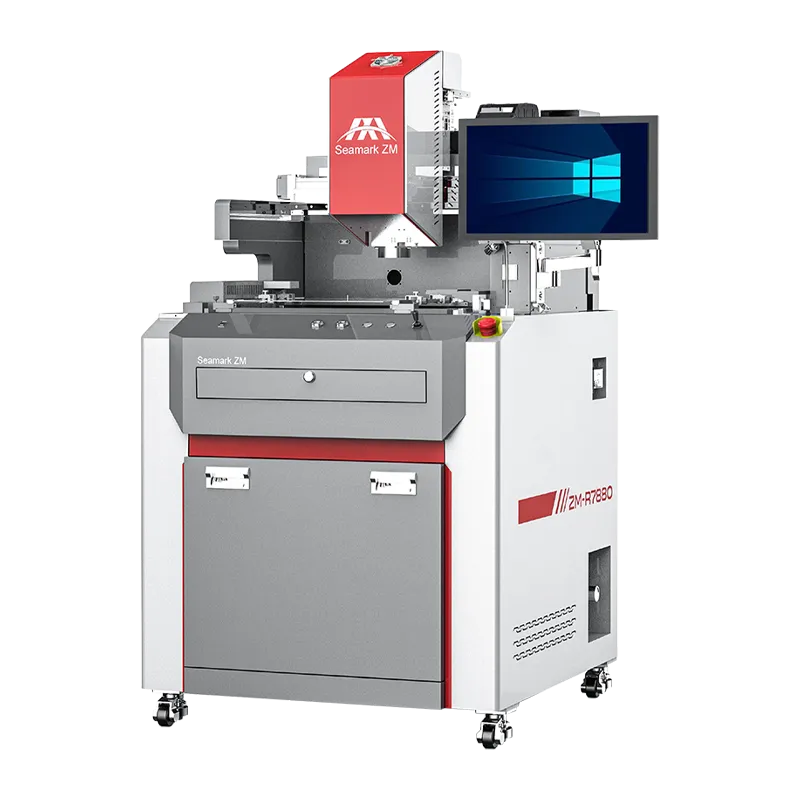
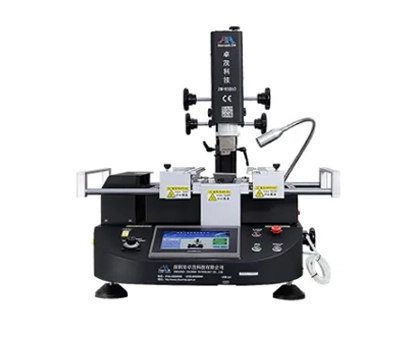
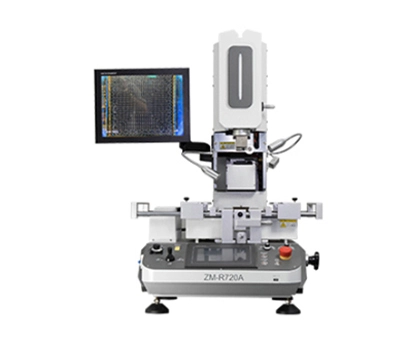
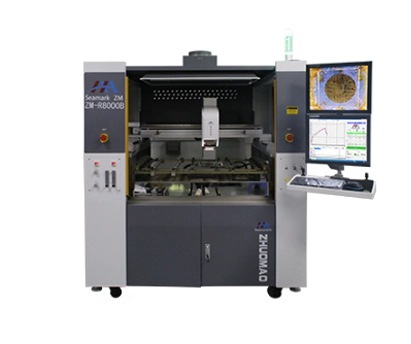
| Model | Alignment System | Automation Level | Heating Zones | Best For (Application) |
| ZM-R8650C | High-Definition Optical Visual | Fully Automatic | 3 Independent Zones | 5G Communication Boards, Large Server Motherboards, Data Centers |
| ZM-R7220A | High-Precision Optical Alignment | Semi-Automatic | 3 Independent Zones | Laptops, Gaming Consoles (PS5/Xbox), Automotive ECUs |
| ZM-R5860 | Non-Optical / Manual | Manual Control | Hot Air + IR | Entry-level Repair, Mobile Phone Logic Boards, Basic PCBA |
| ZM-R720A | Micro-Point Optical Alignment | High Precision | Focused Heat | Micro/Mini LED, Precision Smartphones, Small SMT Components |
| ZM-R8000B | Smart Optical Alignment | Fully Automatic | Large Area Preheating | High-Performance Computing (HPC), Military & Aerospace PCBAs |
Why Choose Seamark ZM as Your BGA Rework Partner?
With over 20 years of dedicated R&D in the SMT repair industry, Seamark ZM (Zhuomao) has become a global leader in high-end PCBA rework technology. Our systems are engineered to meet the rigorous demands of modern electronics:
Precision Alignment: Integrated high-definition optical alignment systems ensure a repeat placement accuracy of ±0.01mm.
Advanced Thermal Control: Utilizing PID closed-loop temperature control and multi-zone heating, our stations prevent thermal shock and board warping.
High Success Rate: Engineered for complexity, our equipment ensures a 99.9% rework success rate for advanced components like 5G server chips, GPUs, and Micro BGA.
Certified Quality: All BGA machines are CE and ISO certified, trusted by Tier-1 EMS companies and global repair centers.
Technical Tips for Successful BGA Rework
To ensure the reliability of your PCBA repair and prevent damage to sensitive components, our engineering team has summarized two critical factors for professional BGA soldering.
1. How to Set the Perfect BGA Rework Temperature Profile?
Setting an accurate temperature curve is the "soul" of BGA rework. A standard lead-free soldering profile typically consists of four stages:
Preheating Stage: Gradually increase the board temperature to 150°C to remove moisture and prevent PCB warping.
Soaking Stage: Maintain between 150°C - 180°C to activate the flux and balance the thermal difference across the board.
Reflow Stage: The peak temperature should be controlled between 230°C - 250°C (for Lead-free) to ensure full melting of solder balls.
Cooling Stage: Rapid but controlled cooling to form a fine-grained solder joint structure.
Deep Dive: For a step-by-step guide on thermal management, please read our professional guide: Temperature Curve Setting Method for BGA Rework Station.
2. Selecting the Right BGA Nozzle
The suction nozzle (hot air nozzle) must match the size of your BGA chip to ensure uniform airflow and prevent "popcorn effects" on surrounding components.
Size Matching: The nozzle should be 2-5mm larger than the BGA chip.
Material Quality: Seamark ZM nozzles are made of high-grade titanium alloy, ensuring they never deform or rust under high temperatures.
Custom Solutions: We provide over 100 types of nozzles for BGA, CSP, QFN, and even customized shapes for specialized shield cans.

 EN
EN
 es
es  ko
ko  de
de  it
it  pt
pt  th
th  ar
ar  pl
pl  vi
vi  tr
tr  ru
ru