
A Ball Grid Array (BGA) is a type of surface-mount packaging that uses an array of solder balls as electrical interconnections. Compared to traditional leaded packages, BGA offers better electrical performance, improved heat dissipation, and higher connection density.
Common types of BGA packages include:
PBGA (Plastic BGA)
CBGA (Ceramic BGA)
CCGA (Column Grid Array)
TBGA (Tape BGA)
In all cases, the solder balls located on the underside of the package serve as the connection points to the PCB, making inspection and rework more challenging than with visible leads.
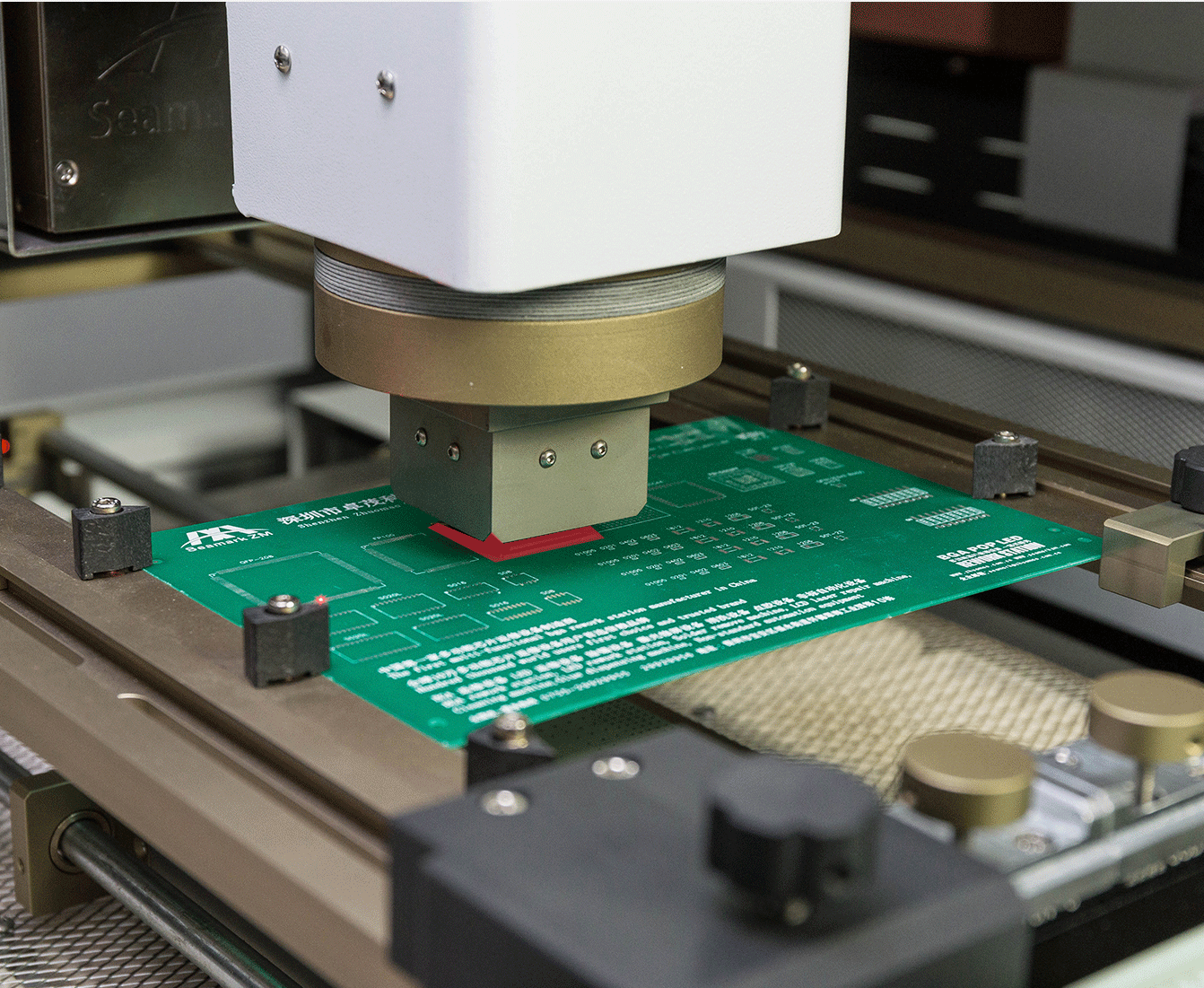
One of the most critical aspects of BGA rework is accurate component alignment. Based on alignment methods, BGA rework stations are generally divided into two categories:
Optical alignment systems use prisms and CCD cameras to simultaneously display the BGA solder balls and PCB pads. This allows operators to precisely align components before soldering.
Key advantages:
High alignment accuracy
Ideal for fine-pitch and micro BGA devices
Reduced risk of placement errors
The working principle involves two imaging paths:
One captures the solder balls of the BGA component
The other captures the PCB pads
These images are merged via a prism system and displayed on a monitor, enabling precise visual alignment.
Non-optical systems rely on PCB fiducial marks, screen printing references, or mechanical positioning for alignment.
In some cases, especially with larger BGA components, minor placement offsets can self-correct during reflow due to surface tension of molten solder. However, this method has limitations:
Not suitable for fine-pitch BGAs
Higher risk of misalignment
Lower repeatability compared to optical systems
For high-precision applications, optical alignment is generally the preferred solution.
A BGA rework station performs localized heating on the PCB to safely remove and replace components without damaging surrounding areas.
Improper heating can lead to:
PCB warpage
Damage to nearby components
Cold solder joints or reflow defects
To prevent these issues, modern rework systems use a combination of:
A preheater warms the PCB evenly, reducing thermal stress and preventing board deformation during rework.
A specially designed heating head delivers controlled heat directly to the target component. Advanced hot air nozzles are engineered to:
Maintain stable airflow
Minimize heat loss
Prevent disturbance to nearby components
Different BGA packages require different temperature profiles due to variations in:
Ball count
Package size
Substrate material
Accurate thermal profiling ensures consistent and reliable soldering results.
Because each BGA device has unique thermal characteristics, process consistency is critical in rework operations.
Best practices include:
Recording temperature profiles for different components
Building a rework parameter database
Standardizing rework procedures
Continuously optimizing process settings
A well-maintained parameter database can significantly improve yield, reduce operator dependency, and enhance long-term production efficiency.
As electronic assemblies become more complex and densely packed, the importance of reliable BGA rework solutions continues to grow.
Modern SMT rework stations are no longer simple repair tools—they are precision systems that combine:
Advanced optical alignment
Intelligent thermal control
Process automation
Understanding how these systems work helps manufacturers improve repair success rates, reduce scrap, and maintain high product quality in today’s competitive electronics industry.
 EN
EN
 es
es  ko
ko  de
de  it
it  pt
pt  th
th  ar
ar  pl
pl  vi
vi  tr
tr  ru
ru