
Cleaning after BGA repair is necessary when the assembly requirements or process chemistry demand it, but more cleaning is not automatically better. The method must remove the relevant residue without damaging components, coatings or the board, and must allow adequate rinsing and drying. A clean-looking perimeter does not prove that the space beneath the BGA is clean.
The practical question is whether the selected cleaning process can reach and remove the material left by the actual repair. Evaluate cleaning access before choosing the flux and repair sequence. If cleaning is optional under the product requirements, a qualified no-clean process may be suitable when effective residue removal cannot be demonstrated.
No universal rule fits every assembly. Review the flux product, the qualified manufacturing process, customer requirements and expected operating conditions. Some residues require removal; some no-clean processes permit retention after suitable qualification. Additional requirements may apply where coating, bonding or sensitive electrical measurements follow the repair.
Distinguish three situations: retaining qualified residue, cleaning with a demonstrated process, and applying a cosmetic local wipe. The last may improve appearance without establishing either of the first two conditions. A repair instruction should state which outcome is required and what evidence demonstrates it.
When planning BGA repair, include cleaning feasibility in the initial process review. If the material requires removal but the package prevents effective access, change the flux or qualified process before processing valuable boards. Do not leave the cleaning decision to the operator after installation, when the relevant surfaces are already concealed.
No-clean flux can leave residue intended to remain on the assembly under defined conditions. That designation does not eliminate the need to control quantity and thermal treatment. Local rework may leave different residue distributions from the original production process, especially where additional flux is applied by hand.
Evaluate the residue in relation to conductor spacing, bias, humidity and circuit sensitivity. A residue that is acceptable in one application may be unsuitable for another. Conversely, visible residue does not automatically prove an electrical failure risk. The decision needs relevant material and process evidence rather than appearance-based assumptions.
Cleaning a no-clean material also requires care. A cleaner may soften part of the residue while leaving material under the package, or spread dissolved contaminants beyond the original site. Avoid assuming that a familiar alcohol or a quick brush can remove every formulation. Follow the material guidance and validate removal, rinsing and drying as a complete sequence.
Access depends on standoff, package size, ball arrangement and the surrounding assembly. Wetting at the edge does not establish that the cleaner reaches the center in sufficient quantity or that loosened residue can escape. A process that works on exposed pads can perform very differently under a low-clearance package.
Cleaning has several transport stages: bringing suitable chemistry to the residue, loosening or dissolving it, carrying it out, removing remaining chemistry and drying the region. Increasing soak time alone does not prove that all these stages succeed. Dense surrounding components, shielding and fixture orientation can further restrict flow.
Use representative test assemblies when developing the method. Match the package geometry, residue amount and thermal process as closely as practical. Destructive examination of selected samples may be needed to understand hidden removal. Record the limits of any surrogate: an open coupon is useful for chemistry screening but may overstate access beneath a real BGA.
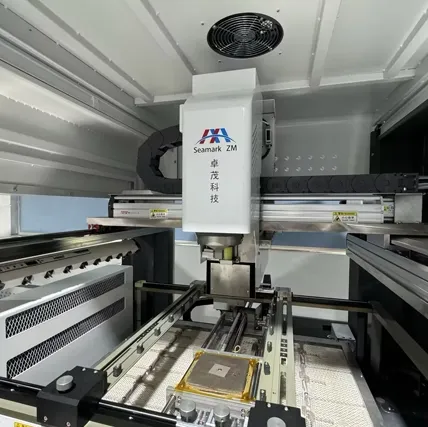
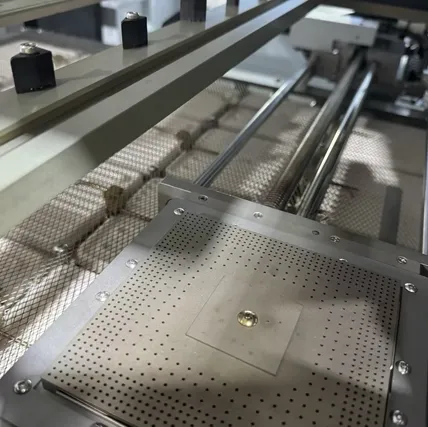
A BGA repair machine controls the repair operation, but its heating capability does not establish cleaning access afterward. Coordinate the equipment recipe with the material and cleaning plan. When access cannot be demonstrated, avoid claiming a hidden area is clean merely because the external board is bright and dry.
Review all materials that will contact the chemistry, including connector housings, labels, adhesives, solder mask and conformal coating. The cleaner's compatibility with flux does not establish compatibility with those materials. Existing coating can also prevent access or trap liquid; determine whether controlled removal and later restoration are required.
Assess the proposed cleaning action as well as the chemical. Brushing, spray pressure and ultrasonic energy introduce mechanical effects. Do not assume ultrasonic cleaning is acceptable for every assembled board, especially where components have restrictions. Use component guidance and representative qualification rather than adopting a generic treatment time.
Process stage | Compatibility question | Verification focus |
Chemistry contact | Will exposed materials tolerate the cleaner? | Swelling, marking, adhesion and function |
Residue removal | Can the process reach concealed material? | Representative hidden-area assessment |
Rinsing | Can dissolved material and cleaner leave the gap? | Extraction or other suitable process evidence |
Drying | Can trapped liquid be removed safely? | Defined drying method and final checks |
Coating restoration | Is the repaired surface ready for the coating? | Cleanliness and coating compatibility |
Qualify drying with the assembly's temperature and handling limits in mind. A dry outer surface does not demonstrate that liquid beneath a package has evaporated. Do not energize the board simply because a fixed waiting period has elapsed if the process has not established adequate drying.
Keep cleaning and coating records with the repair history. If a later leakage or adhesion problem appears, the team needs the actual chemistry, method and drying conditions, not only a statement that the board was cleaned. Material changes can otherwise remain invisible until a field problem develops.
No single routine inspection answers every cleanliness question. Visual examination is useful for exposed residue, damage and obvious staining, but its view under a BGA is limited. Ordinary X-ray inspection is aimed at appropriate structural features; it is not a reliable chemical assay for thin flux residue.
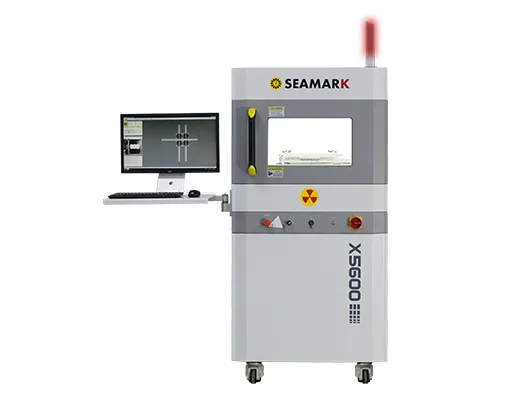
An appropriate BGA inspection system can therefore support the joint inspection while a separate method addresses cleanliness. Do not use a passing X-ray image as the acceptance criterion for residue removal. Define what contaminant or electrical effect matters, then select a measurement that can investigate it.
Ion chromatography can identify and quantify selected ionic species in an extract. Its result depends on the extraction method and the locations sampled; it does not automatically prove every hidden region was accessed. Bulk extraction may also obscure a localized concentration by combining it with a much larger clean area. Use an appropriate sampling strategy and interpret results within the method's limits.
For process qualification, representative surface insulation resistance or other electrical assessments can investigate behavior under relevant conditions. Such methods answer a different question from chemical identification. Where stronger evidence is necessary, combine targeted extraction, electrical evaluation and destructive examination of selected development samples. Routine production checks should then monitor the qualified process rather than pretend to inspect every concealed surface directly.
For example, a perimeter wipe can remove the visible flux ring while leaving the original material beneath the center of the package. Calling that result fully cleaned would overstate the evidence. Qualify a cleaning process that addresses the concealed region. Retaining residue is an alternative only when the product requirements permit it and the uncleaned process is qualified; the work instruction should identify the accepted condition.
A development report should also state what was sampled. Record package geometry, extraction location, cleaning settings and the method used to inspect hidden areas. When routine work later changes flux quantity, package size or wash orientation, compare the change with that scope. A cleaner name alone does not define the process that was demonstrated.
No. Removal depends on the formulation and the processed residue, as well as access and rinsing. Confirm compatibility and cleaning effectiveness for the specific flux rather than assuming that all visible residue dissolves in the same solvent.
No. Appearance alone does not identify composition or electrical impact. Investigate the chemistry, cleaning process and relevant acceptance criteria. Equally, a clear residue should not be assumed harmless without supporting evidence.
Ordinary BGA X-ray inspection cannot certify chemical cleanliness. Use it for the structural features it can resolve, and use a suitable cleanliness or electrical assessment for the residue question.
Yes, if chemistry, mechanical action or drying is incompatible with the assembly. A qualified cleaning process controls these factors. Adding an unvalidated wash after a successful repair can introduce a new failure mechanism.
Cleaning after BGA repair should deliver a defined, verifiable condition. Decide whether residue may remain, demonstrate access where removal is required, check assembly compatibility and qualify drying. Combine appropriate residue assessment with joint and functional inspection, with acceptance criteria matched to each method's demonstrated capability.
· National Physical Laboratory: Measuring Anionic Contamination of Printed Circuit Boards
· National Physical Laboratory: Effects of Ultrasonic Cleaning on Integrity of Components: A Review
 EN
 es
 ko
 de
 it
 pt
 th
 ar
 pl
 vi
 tr
 ru