
There is no universal BGA rework cycle limit that determines whether every PCB can be reused or must be retired. The decision depends on the board and component construction, accumulated thermal and mechanical exposure, observed damage, customer requirements and the ability to verify another repair. An assembly can become unsuitable before an internal cycle limit is reached.
Repair teams should establish retirement criteria before a board returns for repeated work. Counting completed repairs is useful, but the count must be supported by process history and condition evidence. Otherwise, a record showing “two repairs” can hide several aborted removals and unrecorded heating attempts.
Start by defining a cycle for the purpose of the record. A removal-and-replacement job can involve separate heating operations for removal, site preparation and installation. The removed component may also experience ball removal and reballing. Keep job count, board heating events and component exposure distinguishable instead of treating them as interchangeable numbers.
Apply any documented customer, component or assembly restrictions first. Where a qualified process specifies an allowed number of operations, the approval applies within its stated materials and conditions. It is not permission to add an uncontrolled attempt or to use the same allowance on another board construction.
For BGA rework without a complete history, uncertainty itself becomes part of the decision. Look for previous work records, replaced parts and local evidence, but do not assume an unmarked board is unreworked. A missing record should trigger review against the application's requirements rather than an invented zero-cycle starting point.
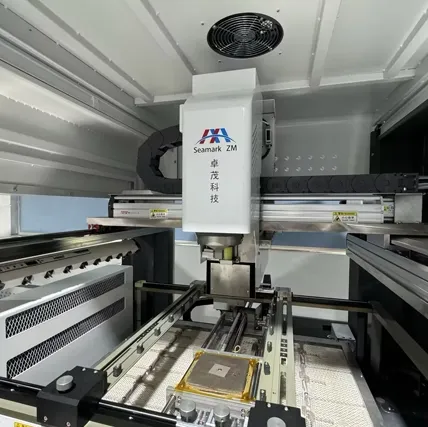
Visible inspection is necessary, but it does not describe the entire exposure history. Record the qualified profile and any excursions, extended dwell or repeated attempts. Include heating of neighboring areas when it materially affects the repair site. A board can receive substantial local exposure during work on an adjacent component without another entry against the original BGA.
Board construction matters. Laminate system, thickness, copper distribution, vias and pad geometry influence the response to heat and handling. Component construction and moisture condition also affect the repair constraints. Do not translate a published test on one assembly into an automatic cycle allowance for all FR-4 boards.
The absence of discoloration or obvious warping is not proof of intact internal structures. Conversely, a cosmetic change requires assessment rather than immediate assumptions about its severity. Compare observations with the acceptance criteria and use appropriate additional inspection where the suspected damage is beyond a surface view.
A BGA repair station should support a controlled process, but precise settings cannot reverse material degradation caused by earlier thermal and mechanical exposure. Preserve the actual history and investigate departures from the approved process before deciding whether another attempt is justified.
Lifted or missing pads require a board-level repairability assessment. Their significance depends on electrical function, surrounding construction and the availability of an approved repair method. A new component cannot compensate for a damaged connection beneath it. Do not assume that a pad is expendable because the board briefly starts without it.
Delamination, blistering, cracked solder mask and suspected pad cratering also deserve separate evaluation. Some defects are visible only after removal or through appropriate analysis. If damage extends beneath the surface, routine solder touch-up may conceal the site without resolving the underlying weakness.
Repeated failure after apparently successful repairs can indicate an incorrect original diagnosis. Internal component defects, board flex, unstable power, contamination or operating conditions may remain untreated. Before authorizing another cycle, review whether the same symptom and failure location have actually recurred, and whether the proposed operation addresses new evidence.
Finding | Decision focus | Reason to stop routine rework |
Lifted or missing pad | Electrical role and approved repairability | Connection cannot be restored or verified |
Suspected laminate damage | Extent and effect on the board | Hidden damage remains unresolved |
Same fault after previous repairs | Failure mechanism and test coverage | No new evidence supports another cycle |
Unknown or excessive exposure | History and applicable restrictions | Compliance or material condition is uncertain |
This assessment should occur before aggressive site preparation removes evidence. Photograph the site and retain removed parts when further analysis is likely. Record the damage location, extent and inspection evidence so the repairability assessment is based on specific findings.
Compare another repair with replacement using the whole outcome. Include diagnosis, labor, replacement components, inspection and testing, plus the consequence of a repeat return. An inexpensive additional heat cycle can become costly if it consumes the last repairable site or causes a failure after the assembly returns to service.
Replacement has its own constraints: board availability, configuration, programming and installation effort can be significant. Record these alongside repair uncertainty. Avoid treating high replacement cost as technical evidence that another repair will work. Cost may influence the decision, but it cannot make a damaged laminate or untestable connection acceptable.
An appropriate BGA inspection system can contribute structural evidence where the suspected condition is detectable. It does not establish remaining service life or exclude every form of board damage. Choose additional electrical, functional or specialist analysis according to the concern rather than relying on one attractive image.

Define a clear stop point. Examples include damage beyond an approved repair method, a prohibited additional cycle, unavailable verification or a repeated fault without a supported diagnosis. A retired board may be retained for controlled failure analysis, but that disposition must remain separate from approval to return it to normal service.
For component rework and board repair programs handling many returns, review patterns across jobs. Repeated damage on one board revision may indicate that the standard recipe, fixture or nozzle needs revision. Retiring individual boards without reviewing that pattern can leave the process that caused the damage unchanged.
Customer requirements can be stricter than a repair team's internal practice. Review contract terms, acceptance class where applicable, traceability requirements, component reuse rules and any limits on repair operations. Obtain the required disposition before exceeding a restriction, not after the board has already undergone another cycle.
Differentiate technical feasibility from authorization. A technician may judge another removal physically possible while the customer prohibits further work. Conversely, permission to attempt a repair does not override component limits or prove the result will be acceptable. Both the process and the release criteria still need to be satisfied.
Document exceptions with their actual scope. Approval for a laboratory development board does not automatically cover production or field-return units. Preserve the reason, required tests and responsible approver so an exceptional decision does not become an unrecorded general rule.
When history is incomplete, communicate the specific gap internally and to the party responsible for disposition. State which operations are known, what damage has been observed and what verification remains possible. This gives the decision maker usable evidence without inventing a remaining-cycle estimate.
For example, a return record may show one prior replacement while the technician's notes reveal an aborted removal and an extended reheating attempt. Those events should remain visible in the thermal history. A decision based only on the single completed replacement would understate the exposure. Review the real sequence against the qualified process and inspect the site before authorizing more work.
Make the retired status clear in the inventory record and physical handling system. Prevent a board retained for diagnosis from re-entering a normal repair queue with its history missing. If later analysis establishes an approved recovery route, reassess it explicitly; retirement should not be reversed merely because a different technician is willing to try another recipe.
No. A fixed number without construction, process and customer context is not a defensible universal limit. Follow applicable restrictions and evaluate actual condition and history before each additional operation.
No. A new component does not erase the board's previous heat exposure, pad preparation or mechanical damage. Record the new component's history separately while retaining the PCB's complete repair record.
Yes. Prohibited exposure, rejectable structural damage or unresolved acceptance requirements can prevent release despite a functional pass. The test only demonstrates the conditions and functions it actually exercised.
No. First determine why the repair failed. More heat can worsen material damage while leaving the original electrical or mechanical cause unresolved. Another attempt needs a supported diagnosis and remaining process margin.
Repeated BGA reworking requires a condition-based decision supported by exposure records and applicable limits. Count operations consistently, inspect the site, investigate repeat failures and verify that another repair can be accepted. Retire the board when damage, uncertainty or restrictions prevent a defensible return to service, even if another heating cycle remains physically possible.
· IPC / Global Electronics Association: Effects of BGA Rework Cycles on PCB Assembly Reliability
· NASA / Jet Propulsion Laboratory: NASA Guidelines for BGA and DSBGA Selection and Application
 EN
 es
 ko
 de
 it
 pt
 th
 ar
 pl
 vi
 tr
 ru