
The decision in BGA chip rework is whether the evidence supports reusing the existing component or installing a verified replacement. Reballing renews external solder balls; it cannot correct a failed semiconductor die or every defect inside a package. Replacing a sound component, however, adds parts cost without necessarily correcting a damaged PCB pad or unstable power rail.
A defensible repair begins with fault localization, then considers component condition, process history and final test coverage. The goal is to select a repair that addresses the probable failure mechanism and can be verified, rather than choosing the cheapest visible operation.
First establish why the BGA is suspected. Record the reported symptom and reproduce it where practical. Check power, clock, reset, firmware and relevant peripheral behavior before attributing the fault to hidden joints. A board that fails near a large processor does not automatically have a processor solder problem.
Reballing may be appropriate when evidence points to external interconnect damage and the removed component has acceptable pads, construction and history. Replacement is generally the more defensible candidate when internal damage is established, the package is physically compromised or reuse is prohibited. Neither choice solves a board defect that remains at the original site.
Before approving BGA repair, write down the working diagnosis and the observations that would change it. This prevents a temporary response to heating from becoming the entire justification for reballing. Heat can affect multiple materials and connections; symptom improvement alone does not identify which one caused the fault.
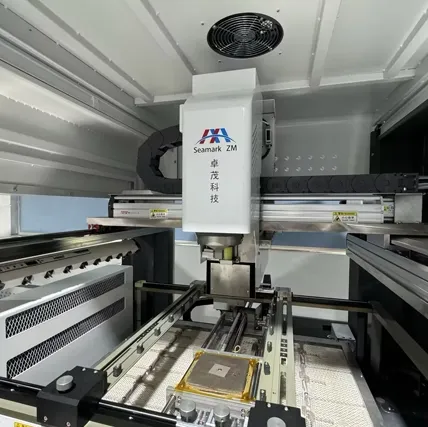
External joint defects can include opens, bridges and fractures in the package-to-board interconnects. Internal failure may involve the die, package substrate or internal connections. Similar outward symptoms can arise from either category, so the diagnostic method must match the question. Ordinary board X-ray images do not test transistor function and may miss cracks or interfaces that are poorly resolved.
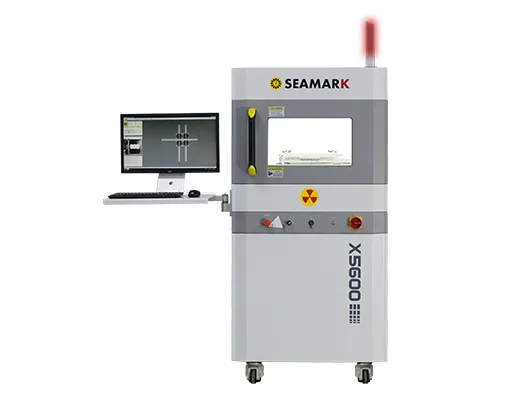
Use the evidence available from electrical measurements, system logs, microscopy and suitable structural inspection together. A BGA inspection system is valuable when the suspected defect is observable in its imaging geometry. A clean image narrows only those possibilities that the method could detect with sufficient resolution.
Comparison with a known-good board or verified component can strengthen a diagnosis, but control the comparison carefully. Different firmware, memory configurations or board revisions can create misleading differences. Where destructive analysis is justified, retain the suspect component and failed site for a specialist rather than repeatedly heating them until the original evidence is lost.
A component that changes behavior under temperature or pressure deserves investigation, not an immediate conclusion. The response could originate in a solder joint, an internal connection, a socket or another nearby part. Avoid uncontrolled flexing and localized heating as substitutes for a documented diagnostic method.
A reusable component needs more than an intact top surface. Inspect the underside after removal and solder preparation for missing pads, lifted metallization, contamination and damage to solder mask or substrate. Confirm that the original ball map and the replacement alloy and diameter are known. Uncertain provenance can make an apparently inexpensive salvaged component unsuitable for the repair.
Review moisture handling and previous thermal exposure where records exist. Removal, ball removal, reballing and reinstallation can subject the component to several distinct heating steps. Do not describe the total simply as one repair if that hides material exposure. Follow the relevant component guidance and approved reballing process rather than using an arbitrary cycle allowance.
Confirm that reuse is contractually acceptable. Some customers require new traceable parts or prohibit recovered devices. Others may allow reuse only after defined screening. These requirements should be checked before labor is spent on the reballing process. A component that can technically be reballed may still be unacceptable for its destination.
Retain identity throughout handling. A labeled tray and job record reduce the risk of mixing a known failed package with one awaiting inspection. Where the component cannot be adequately tested off-board, state that limitation in the internal disposition and plan the necessary board-level verification after installation.
Compare the complete repair routes rather than the labor time for placing new balls. Include diagnosis, removal, preparation, reballing or procurement, reinstallation, inspection and final testing. Add the consequence of another failure: a repeat return may consume more technician time and board thermal margin than the initial parts saving justified.
Replacement also carries risks. The part may have uncertain traceability, incompatible revision requirements or unavailable programming data. A lower purchase price is not evidence of equivalence. Verify identity and compatibility before removal so the team does not discover that the proposed replacement cannot be used after the original component has been disturbed.
Evidence or constraint | Reballing consideration | Replacement consideration |
External joint fault with sound package | Plausible if reuse is approved | May be unnecessary parts expense |
Confirmed internal component failure | Does not address the cause | Preferred candidate with verified part |
Damaged PCB pads or laminate | Board repairability controls the decision | A new chip alone is insufficient |
Unknown component history | Reuse uncertainty remains | Traceable new part may reduce uncertainty |
Weak final test coverage | Limited confidence in either route | Additional verification may be needed |
The repair decision must also account for board condition, customer requirements and the available verification. For example, an external joint fault on a heavily damaged board may still justify board replacement. Conversely, an expensive but verifiably sound component can be worth reusing if the customer permits it and the process is qualified.
Plan final tests before choosing the repair route. The test set should exercise the original symptom, the functions associated with the component and any circuits exposed to rework. Include relevant operating modes, interfaces and approved temperature or load conditions. A brief power-on test may show basic operation while leaving important connections unexercised.
Keep structural acceptance and electrical acceptance distinct. Use imaging for supported workmanship criteria, electrical checks for accessible connections and functional tests for specified behavior. Where results disagree, investigate rather than averaging them into a pass. A visibly suspect joint is not accepted merely because the current software test does not use that connection.
A team selecting BGA rework equipment should consider how process records can be associated with later test results. Preserve component identity, recipe, inspection images and measured values under the board serial number. These records help distinguish a repeated fault from an unrelated failure after return to service.
When outsourcing to a BGA rework service provider, define the work scope and required records at the quotation stage. Specify whether the quote includes reballing or replacement, who supplies the component, what tests are performed and how unresolved failures are handled. An invoice stating that a BGA was replaced is not a test report or proof that the original diagnosis was correct.
For example, a board with intermittent communication errors and no visible bridge should not be assigned automatically to reballing. Verify the interface conditions and collect evidence during the failure. If a replacement component later resolves the symptom, preserve the removed package for analysis where justified; that outcome alone does not establish whether the original problem lay in its external joints or inside the package.
Set a review point before repeating a failed repair. The review should ask what new observation supports the next operation and whether the board can tolerate it. If the answer is only that the first attempt did not work, the diagnosis needs improvement before another component or solder-ball operation is authorized.
Reballing renews the component's external solder balls and their attachment to the package lands; it may address defects at that interface. It does not repair damaged silicon or guarantee that internal package defects are absent. The diagnosis must support reuse.
No. Reliability also depends on the replacement part's authenticity and compatibility, board condition and installation quality. A new component fitted to a damaged site can fail despite being sound when supplied.
No. Heating changes several conditions simultaneously. Treat the response as a diagnostic observation that needs corroboration, particularly when the fault can arise in power, firmware or internal package connections.
Assess approved reuse, further analysis, waiting for a traceable part or board replacement. Lack of supply does not make a damaged component sound. Document the remaining uncertainty before choosing a route.
BGA chip rework should follow the evidence for the failure mechanism. Reball a component only when its condition and reuse requirements support that route; replace it when the fault or provenance makes reuse indefensible. In both cases, check board repairability and define final verification before committing to another thermal operation.
· NASA / Jet Propulsion Laboratory: NASA Guidelines for BGA and DSBGA Selection and Application
· NASA / Jet Propulsion Laboratory: 3D X-ray CT for BGA/CGA Workmanship Defect Detection
 EN
 es
 ko
 de
 it
 pt
 th
 ar
 pl
 vi
 tr
 ru