
Electronic manufacturing services (EMS) providers manage thousands of electronic component reels across receiving, storage, production preparation, and material returns. Keeping accurate records of component quantities is essential for preventing material shortages, reducing inventory discrepancies, and ensuring that production orders can proceed as planned.
An X ray reel counter helps electronics manufacturers verify the number of surface-mount components remaining on a reel without manually unwinding and counting individual parts. When integrated into a standardized workflow, an SMT reel X ray counter can support more consistent material verification throughout the production cycle.
This guide explains how EMS factories can implement X-ray reel counting at each key inventory stage, establish repeatable operating procedures, and decide whether an offline counter or a counter machine online solution better fits their material-handling process.
EMS facilities often receive components from multiple suppliers, store materials in different warehouse locations, and issue reels to several production lines. Partially used reels may return to storage after each production run, making quantity verification particularly important.
Without a standardized procedure, factories may encounter:
Receiving discrepancies: Actual reel quantities differ from supplier records or expected quantities.
Inaccurate inventory records: The recorded balance does not match the physical quantity remaining.
Production delays: Material shortages are discovered after a work order has been released.
Unreliable returned quantities: Partially used reels are returned without accurate remaining-stock records.
Inefficient stocktaking: Employees spend excessive time manually checking reel quantities.
An SMT reel X ray counter can help address these problems by making quantity verification more repeatable. However, the equipment works best as part of a broader material-control procedure that includes correct part identification, transaction recording, and inventory reconciliation.
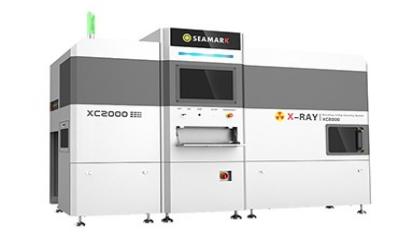
The receiving stage is the first opportunity to establish a reliable quantity record.
When a shipment arrives, warehouse personnel should verify the supplier's documentation and identify each reel before performing any required counting checks.
A standard receiving procedure should include:
Match the part number against the purchase order and packing list.
Check the supplier label, lot number, and reel identification.
Use an X ray reel counter to verify quantities when required by the receiving policy.
Record the verified quantity and any discrepancy.
Follow the established process for investigating or quarantining materials with unresolved issues.
For example, if the supplier documentation indicates that a reel contains 5,000 components but the counting result differs, the receiving team should repeat the check when appropriate and investigate the discrepancy before updating the inventory record.
The counter provides quantity information; it does not independently verify component authenticity, electrical performance, or whether the reel contains the correct part number. Those checks require separate controls.
After receiving inspection, reels are typically assigned to storage locations and later selected for production orders.
Accurate quantity records help warehouse teams determine whether sufficient materials are available for upcoming production. Before kitting, the operator should verify the reel identity, check the recorded balance, and perform a physical count when required by the factory's procedures.
An SMT reel X ray counter can help verify reel quantities without requiring manual counting. This is particularly useful when the warehouse handles large volumes of components or frequently prepares kits for different PCB assemblies.
A standardized kitting process should record:
Component part number and reel identification.
Production order or kit reference.
Verified quantity available.
Quantity issued to production.
Remaining quantity, where applicable.
Operator and transaction details, according to the factory's traceability requirements.
These records help connect physical material movements with inventory data. Where barcode scanning or warehouse management system integration is available, it can further reduce manual data-entry errors.
Before components are released to production, the material team should confirm that the selected reels match the production order and that sufficient quantities are available.
A practical procedure includes checking the part number, reel label, required quantity, and inventory status. The team can then use an X ray reel counter to verify selected reels according to the factory's material-control policy.
This process is particularly useful for high-value components, materials with a history of quantity discrepancies, or production orders with strict material requirements.
For factories that count reels at a dedicated workstation, an offline machine may be sufficient. Facilities seeking to incorporate counting into a more automated material-handling process can evaluate an online solution, provided that the equipment supports the required workflow and system interfaces.
Material returns are a common source of inventory discrepancies in EMS factories. After a production run, a reel may contain fewer components than originally issued, and the remaining quantity must be recorded before the reel is returned to storage.
A standardized return procedure should include:
Identify the returned reel and its associated production order.
Inspect the reel and carrier tape for visible damage.
Count the remaining components using an appropriate counting method.
Compare the result with the expected balance.
Record the verified quantity and return the reel to the designated inventory location.
An SMT reel X ray counter can help verify remaining quantities without unwinding the reel. This reduces dependence on estimates and makes it easier to identify differences between expected and actual balances.
If a discrepancy remains, the material team should investigate possible causes, such as incorrect transaction records, material loss, or counting errors, before adjusting the inventory.
Cycle counting involves checking selected inventory items on a recurring schedule instead of relying exclusively on a full physical stocktake.
EMS factories can prioritize reels according to factors such as material value, usage frequency, discrepancy history, and production criticality.
An offline counter can be used at a dedicated inspection station to verify selected reel quantities during routine inventory checks. The results can then be compared with the warehouse management system or other inventory records.
When discrepancies occur, the team should document the expected quantity, verified quantity, difference, investigation findings, and corrective action. Reviewing recurring discrepancies can also reveal weaknesses in receiving, issuing, return, or transaction-recording procedures.
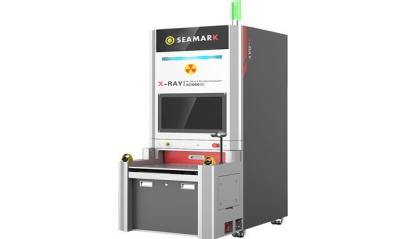
Both offline and online reel counters can support material verification, but their roles differ.
| Evaluation factor | Offline counter | Online counter machine |
|---|---|---|
| Typical workflow | Counting at a separate workstation | Counting within a supported material-handling workflow |
| Installation | Usually more flexible for standalone operation | Depends on the intended integration and installation |
| Material handling | Reels are brought to the counting station | Reel movement may be incorporated into a more automated process |
| Best-fit application | Receiving checks, returns, audits, and cycle counts | Facilities seeking a more integrated counting workflow |
| Key consideration | Operator handling and counting-station capacity | Integration compatibility, throughput, and system requirements |
When evaluating a counter machine online, buyers should confirm the actual loading and unloading process, supported reel formats, counting performance, and compatibility with existing inventory systems. The term “online” can describe different configurations, so the supplier should clarify exactly how the equipment operates.
Seamark offers an offline reel counter and an online reel counter for manufacturers evaluating different counting workflows.
Yes, provided the reel configuration and component type are supported by the equipment. Buyers should validate performance using representative partially used reels before deployment.
Not necessarily. The counting frequency should follow the factory's risk-based material-control policy, considering component value, supplier performance, discrepancy history, and production requirements.
That depends on the equipment's software and available interfaces. Automatic updates require compatible system integration and a properly configured workflow.
Yes. An offline counter can support high-volume operations when counting-station capacity and material handling meet demand. Factories should evaluate actual daily reel volume and required turnaround time.
Repeat the count when appropriate, verify reel identification and transaction records, investigate the cause, and document the final result before making an inventory adjustment.
A standardized reel counting workflow helps EMS factories maintain more reliable component records from receiving through production kitting, material returns, and cycle counting. An X ray reel counter supports this process by making reel quantity verification more consistent and reducing the need for manual counting.
Whether a factory selects an offline counter or a counter machine online depends on its material flow, counting volume, and integration requirements. By combining suitable equipment with clear procedures, accurate transaction records, and documented discrepancy handling, electronics manufacturers can improve inventory control and reduce avoidable production disruptions.
 EN
 es
 ko
 de
 it
 pt
 th
 ar
 pl
 vi
 tr
 ru