
Choosing an X-ray reel counter is an important decision for electronics manufacturers that need reliable component inventory management. Although equipment specifications can provide an initial comparison, they do not always demonstrate how a machine will perform with the components, reel formats, and operating conditions used in a real SMT factory.
Before purchasing an offline counter or an online counting solution, buyers should evaluate counting performance using representative samples, verify repeatability, and establish clear acceptance criteria. A structured trial helps identify potential limitations before installation and reduces the risk of choosing equipment that does not meet production requirements.
This guide explains how to test an X-ray reel counter before purchase, compare offline and online solutions, and prepare a practical acceptance checklist.
An X-ray reel counter estimates component quantities by capturing and analyzing images of components inside a reel. Its performance depends on factors such as component dimensions, packaging, image quality, counting algorithms, and operating conditions.
A demonstration using only one convenient sample may not reflect the variety of reels handled in daily production.
Pre-purchase testing helps manufacturers:
Verify counting results against known reference quantities.
Assess performance across different component sizes and package types.
Determine whether partially used reels can be counted reliably.
Evaluate repeatability and counting time.
Confirm that the equipment fits the intended material-handling workflow.
For procurement teams, these results provide a more meaningful basis for comparison than advertised specifications alone. They also help establish measurable expectations before the equipment is delivered.
The first step is to prepare samples that reflect actual factory requirements. The objective is not simply to demonstrate that the machine can count reels, but to determine whether it can handle the range of materials expected in routine operation.
Prepare reels containing representative components, including small passive components and other commonly used surface-mount devices. Where relevant, include different carrier tape formats and component arrangements.
Small components packed closely together may present different image-processing challenges from larger components. Testing multiple types helps reveal whether the proposed system is suitable for the intended application.
Full reels are useful for establishing baseline performance, but partially used reels are also important because they are common in SMT production.
Include reels with different remaining quantities and packaging conditions. If the factory regularly handles nonstandard reels, those should also be included where the supplier confirms that they are supported.
Each test sample should have a reliable reference quantity established through an appropriate verification method.
Record the reel identification, component type, reference quantity, and relevant sample characteristics. This makes it possible to compare the machine's results against a consistent baseline.
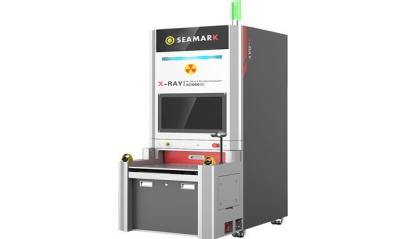
A successful demonstration should measure more than whether the displayed quantity matches the reference count once.
Step 1: Record the initial result. Run each sample according to the supplier's recommended procedure and record the displayed quantity.
Step 2: Repeat the test. Count the same reel multiple times under comparable conditions to assess repeatability.
Step 3: Calculate the difference. Compare each result with the verified reference quantity.
A simple absolute counting error can be calculated as:
Absolute counting error = |Measured quantity − Reference quantity|
For example, if the verified quantity is 2,000 components and the counter reports 1,996, the absolute counting error is four components.
Step 4: Investigate inconsistent results. If repeated counts differ, determine whether the cause relates to sample positioning, imaging conditions, packaging, or another factor.
Step 5: Compare results with agreed requirements. The acceptable error should be established before testing, based on the manufacturer's needs and the supplier's documented performance commitments.
Do not assume that one successful sample proves universal accuracy. A broader sample set provides stronger evidence of suitability.
A useful evaluation should include samples that reflect the more challenging conditions of everyday operation.
Consider testing:
Partially used reels with different remaining quantities.
Small components with closely spaced arrangements.
Different supported carrier tape and reel formats.
Reels with packaging variations commonly encountered in the factory.
Samples that have previously caused inventory discrepancies.
If the equipment is expected to support barcode identification, data export, or inventory-system integration, include these functions in the trial as well.
Buyers should distinguish between counting performance and identification or data-management functions. A correct component count does not automatically verify that the reel has the correct part number or that the inventory record has been updated successfully.
An offline counter typically operates at a separate workstation, making it suitable for dedicated reel verification, incoming inspection, inventory audits, and material returns.
An online solution may suit manufacturers seeking a more integrated material-handling process. However, the actual automation level, loading method, supported interfaces, and throughput depend on the equipment configuration.
When comparing a counter machine online with an offline model, buyers should evaluate the following:
| Evaluation factor | Offline counter | Online counter machine |
|---|---|---|
| Material handling | Reels are brought to a dedicated workstation | Depends on the integrated loading and transfer arrangement |
| Workflow | Suitable for separate counting tasks | May support a more integrated counting process |
| Integration | Can operate as a standalone unit or use supported interfaces | Requires verification of compatibility with the intended workflow |
| Throughput evaluation | Include operator handling and reel changes | Include equipment cycle time and material transfer |
| Best-fit consideration | Flexible counting and inventory verification | More integrated material processing |
Neither configuration is automatically the better choice. Buyers should compare the total workflow, not just the machine's individual counting time.
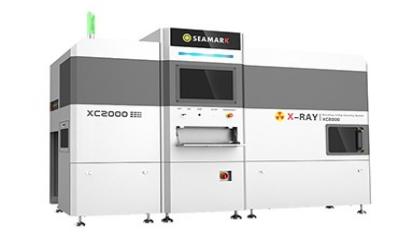
Before finalizing a purchase, document the results of the equipment trial.
| Checklist item | What to confirm |
|---|---|
| Sample coverage | Representative component types and reel formats have been tested |
| Reference quantities | All test samples have verified quantities |
| Counting performance | Results meet the agreed requirements |
| Repeatability | Repeated tests produce sufficiently consistent results |
| Cycle time | Counting speed meets operational expectations |
| Ease of use | Operators can follow the intended procedure |
| Data handling | Required reports, exports, or interfaces work as specified |
| Supplier support | Training, maintenance, and technical assistance are defined |
The acceptance checklist should identify the test conditions, required performance thresholds, actual results, and any unresolved issues. Both parties should agree on the acceptance requirements before the purchase is finalized.
There is no universal number. The sample set should cover the component types, reel formats, and operating conditions relevant to the factory. More varied samples generally provide a more useful assessment than repeatedly testing one easy sample.
Compare the displayed quantity with a verified reference count, repeat the test, and document the differences. Acceptance thresholds should be defined according to the intended application and agreed equipment specifications.
Yes. An offline counter may be appropriate when reel counting takes place at a separate workstation and its capacity meets the factory's workload.
Evaluate counting performance, loading and unloading procedures, throughput, supported reel formats, data interfaces, and compatibility with the intended material-handling workflow.
No. Usability, cycle time, supported materials, repeatability, data management, maintenance, and supplier support can all affect the long-term value of the equipment.
Evaluating an X-ray reel counter before purchase helps manufacturers determine whether the equipment meets their actual component-counting requirements. Representative sample testing, verified reference quantities, repeatability checks, and documented acceptance criteria provide a stronger basis for decision-making than specifications alone.
Whether selecting an offline counter or an online solution, buyers should validate both counting performance and the complete operating workflow. A structured pre-purchase trial helps reduce implementation risks, supports more reliable inventory management, and ensures that the selected equipment is appropriate for the factory's production needs.
 EN
 es
 ko
 de
 it
 pt
 th
 ar
 pl
 vi
 tr
 ru